
Frequently Asked Questions (FAQ)
General Questions About Hello Harmony Vet
We offer acupuncture, pet chiropractic care, Chinese herbal therapy, food therapy, massage, cold laser therapy, integrative care, pain management, geriatric pet care, hospice care, in-home pet euthanasia, and h0use calls.
We do not offer vaccines, surgery or general well care. We do not have the capabilities for urgent or emergency care.
Our services are complimentary to your regular/ preventative veterinary care.
Yes! For integrative veterinary services, we provide house calls for the immediate Quad City area only.
We provide in-home pet euthanasia to the Quad Cities and surrounding communities in both Iowa and Illinois. Please contact us to see if we service your area.
We have a small clinic on the Illinois side of the quad cities where we see patients for acupuncture, etc.
For integrative house calls, we travels to Rock Island, Moline, East Moline, Silvis, Milan, Coal Valley, Davenport, and Bettendorf. For in-home euthanasia, we travel up to 60 minutes from our home base.
You can use our online scheduling platform or Contact Form.
All of our contact information can be found on our Contact Us Page. The best way to reach us is through email or text 309-550-9033
Hours of operation are Monday through Thursday 9am -5pm and Friday 9am-3pm. HOWEVER, office hours vary. Dr. Rider balances her time between seeing patients in the clinic and at their home. We want to make sure you get the service you need. The operations are nearly a one person show! Therefore office visits are by appointment only, which includes seeing pets, doctor consults and picking up medications or supplies.
When using the on-line booking portal/ calendar the first thing to consider is what type of appointment you need: In-home Euthanasia, House call, New patient, Follow-up or Hospice Care.
In-home Euthanasia: To book an in-home euthanasia right away, use our on-line calendar here. If you’re not quite ready for that step, please see our In-home Euthanasia page for detailed information on this process, frequently asked questions and pricing, after care of your pet, and more.
House Calls: For Doctor to home to your home, select “House Call” appointment. If you want acupuncture but you need Dr. Rider to come to your home, you select the “House Call” button. If you need a house call, always select this option and then indicate why type of services you are wanting. If you want an in-home euthanasia for your pet, you select the pink “In-home Euthanasia” button at the top of our contact page or the “In-home Euthanasia” appointment type. All other services listed are for CLINIC appointments only.
Clinic Appointment: If you are bringing your pet to the clinic and Dr. Rider hasn’t seen the pet before, please select “New Patient/ 1st Consult”. If your pet is returning for follow up services, please select “Follow-up/ Recheck Consult”. If you are specifically interested in Hospice and Palliative Care for your pet, you can select this option.
Appoints at the clinic range from 30-60 minutes depending on the type of appointment. House call appointments are about 45-60 minutes long.
For integrative therapies, we have an all-inclusive pricing concept so you can focus on your pets healing instead of worrying about add-on costs, cumbersome pricing packages, etc. There are no extra fees for individual integrative services. Fees for integrative services can be found here.
All In-home euthanasia pricing depends on the size of the pet and after care wishes. All prices can be found on the In Home Euthanasia web page.
Please note we do charge consultation fees for in depth emails/phone calls/ texting, regarding disease consultation, questions regarding new issues/ concerns, in-depth food therapy questions, and hospice consultations and are available only to current clients.
When the stomach has food in it, the body is focusing on digesting. This requires increased blood flow to the area, complex neuroendocrine activities, etc. We want the body to be able to respond to focus on responding to the treatments. Also, if you have you know your pet gets nervous at the vet, does take treats, etc, it’s better to skin an entire meal or pull up your pet’s food the morning of the appointment (night before depend on the time). This way we can use food to help calm your pet and change it’s emotional state.
Answers to questions about In-home pet euthanasia can likely be answered here. If you still have questions or concerns, please feel free to email us directly at ridervetservices@gmail.com or use the Contact form.
Integrative Veterinary Medicine
Integrative veterinary medicine combines conventional veterinary care with therapies like acupuncture, pet chiropractic care, nutrition, and other supportive treatments. The goal is to look at the whole pet, consider all available options, and create a care plan that fits your pet’s needs.
Acupuncture uses very thin needles placed at specific points on the body to help support the body’s natural healing processes. It may help with pain, mobility, inflammation, GI issues, anxiety and a few other health conditions. Every pet is different, so we tailor treatment to their individual needs.
Absolutely! Bloodwork, imaging, and medications can all be important parts of your pet’s care. We use conventional diagnostics and treatments when needed to better understand what’s going on and help make informed decisions about the best approach for your pet. We recommend you get all of your diagnostic care with your full service veterinarian, but Dr. Rider will review the tests to make sure we are all on the same page.
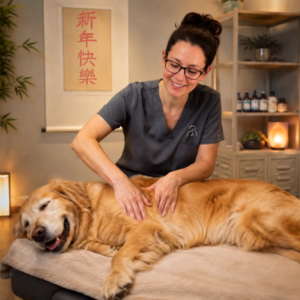
TCVM is a system of veterinary care that looks at patterns in the body to help guide treatment. It includes tools like acupuncture, Chinese herbal medicine, food therapy and a specific type of massage called Tui-na. Dr. Rider uses these approaches alongside modern veterinary medicine to help support your pet’s health and comfort.
In many cases, yes! Integrative therapies can often be used alongside your pet’s current medications and treatments. Dr. Rider reviews your pet’s health history and current care to help determine which options may be safe and useful for them.
We’ll talk about your pet’s health history, current concerns, and your goals for their care. Dr. Rider perform an Eastern exam and review any records, test results or medications you have. From there, you will work together to develop a care plan that fits your pet’s needs and your family’s goals. she will discuss what treatment she thinks is best and proceed. Your pet will receive a treatment and plan at their first visit!
Yes! Most animals are very accepting of acupuncture, even cats!
There is a small percentage of animals that do not like the needles. That’s OK! Other modalities like laser acupuncture, massage, herbals and pet chiropractic care can be used to achieve desired results.

Hospice and Palliative Care
Pet hospice and palliative care focus on maintaining your pet’s comfort, dignity, and quality of life when facing a chronic, progressive, or life-limiting illness.
Rather than focusing solely on curing a disease, we shift our attention toward managing symptoms, relieving discomfort, preserving the things your pet enjoys, and supporting you through the journey.
This doesn’t mean we stop providing medical care. In fact, it often means becoming more thoughtful and intentional about which treatments will make the biggest difference in your pet’s daily life.
At Hello Harmony Vet, we call this caring beyond a cure.
Although these approaches can overlap, they serve somewhat different purposes.
Senior Pet Care focuses on helping aging pets remain comfortable, active, and happy. This may include addressing arthritis, mobility changes, anxiety, nutrition, and other age-related conditions.
Palliative Care focuses on relieving symptoms and improving quality of life in pets with chronic, progressive, or life-limiting conditions. It can begin at any stage of illness and may continue for months or even years.
Hospice Care is generally appropriate when a pet is approaching the end of life. The focus shifts toward comfort, dignity, symptom management, and preparing the family for the final stages of their pet’s journey.
Our goal is to meet your pet where they are, rather than assuming that every aging pet is nearing the end of life.
Many conditions can benefit from a comfort-focused approach, including:
- Cancer and tumors
- Chronic kidney or liver disease
- Congestive heart failure
- Advanced arthritis and degenerative joint disease
- Neurological conditions and progressive weakness
- Cognitive dysfunction (canine or feline dementia)
- Chronic respiratory disease
- Persistent gastrointestinal problems
- Progressive mobility or quality-of-life concerns
- General decline associated with advanced age
A terminal diagnosis is not required to benefit from palliative care. Sometimes, the most appropriate time to begin is when you first recognize that your pet’s condition is changing and you want to plan ahead.
This is one of the most difficult questions families face, and there isn’t always a clear answer.
Some signs that your pet may benefit from hospice or palliative care include:
- Difficulty getting up, walking, or navigating the home</l
- Changes in appetite, thirst, or body weight
- Increased anxiety, restlessness, or confusion
- Changes in sleep patterns or interaction with family
- Difficulty breathing, coughing, or persistent nausea
- Accidents in the house or difficulty getting outside
- Less interest in favorite activities
- More bad days than good days
You don’t need to wait until your pet is suffering or experiencing a crisis to seek help.
If you’re noticing changes but aren’t sure what they mean, we can help evaluate your pet’s comfort, discuss treatment options, and determine what additional support may be beneficial.
Absolutely not.
Choosing hospice or palliative care is not giving up. It is choosing a different way to care for your pet.
Sometimes, the most meaningful medical decisions aren’t about extending life at all costs, but about making the time we have together as comfortable and enjoyable as possible.
There may still be medications, therapies, and treatments that can make a tremendous difference in your pet’s quality of life.
Our goal is to help you make informed decisions that honor your pet’s needs while respecting your family’s wishes and circumstances.
There is no set timeline.
Some pets benefit from palliative care for many months or even years, while others may need hospice support for only a few weeks or days.
Every disease progresses differently, and every pet responds differently to treatment.
We will work with you to monitor changes in your pet’s comfort and quality of life and adjust the care plan as their needs evolve.
Your initial consultation is an opportunity for us to get to know your pet, understand their medical history, and learn what matters most to your family.
During the visit, we will:
- Review your pet’s medical history, previous diagnostics, and current medications.
- Perform a comprehensive physical examination.
- Assess pain, mobility, appetite, behavior, and overall quality of life.
- Discuss your concerns, goals, and expectations.
- Explain your pet’s medical condition and what changes you may expect.
- Develop an individualized comfort-care plan.
- Discuss medications, therapies, and supportive care options.
- Help you recognize signs of discomfort and understand when additional intervention may be needed.
We also discuss practical aspects of caregiving, including medication administration, mobility assistance, hygiene, and ways to make your home more comfortable for your pet.
Most importantly, there is time for questions. You do not need to have everything figured out before we meet.
Treatment is individualized according to your pet’s condition, symptoms, and goals of care.
Depending on your pet’s needs, recommendations may include:
Conventional medications for pain, inflammation, nausea, anxiety, and other symptoms.
Acupuncture to support pain management and other aspects of comfort.
Veterinary herbal medicine when appropriate.
Laser therapy to support comfort and mobility.
Massage and other gentle supportive therapies.
Nutritional and food therapy recommendations.
Mobility assistance and environmental modifications.
Guidance on hydration, appetite, elimination, and hygiene.
We use an integrative approach, combining conventional veterinary medicine with complementary therapies when appropriate.
Not every treatment is right for every patient. Our priority is to select therapies that offer meaningful benefits without creating unnecessary stress or discomfort.
Yes! We believe collaboration is an important part of good hospice care.
Your primary veterinarian may continue managing your pet’s underlying disease, diagnostics, and other medical needs while we focus on comfort, symptom management, and quality of life.
With your permission, we can review medical records and communicate with your primary veterinarian or specialists to help coordinate care.
Our intention is to complement your existing veterinary relationship, not replace it.
In some cases it might make more sense for us to take over a majority of your pet’s hospice care, and that’s OK too. Every situation, pet and family is different.
This depends on your pet’s medical condition, how quickly things are changing, and the level of support needed.
Some pets may only need occasional reassessments, while others benefit from more frequent follow-up visits.
We will help establish a monitoring and follow-up plan that makes sense for your pet and your family. As your pet’s condition changes, we can adjust that plan accordingly.
One of the most important parts of hospice care is preparing for the unexpected.
We will discuss what changes to watch for, which symptoms may be managed at home, and when additional veterinary attention is needed.
However, hospice care is not an emergency or 24-hour veterinary service. If your pet experiences severe difficulty breathing, collapse, uncontrolled bleeding, seizures, or another urgent medical crisis, you should seek immediate care through an emergency veterinary hospital.
Whenever possible, having a plan in place before a crisis occurs can help reduce stress and uncertainty for everyone.
No. Hospice care does not require natural death, nor does it mean that euthanasia is discouraged.
Some families elect humane euthanasia when their pet’s discomfort can no longer be adequately managed or their quality of life has declined beyond what is acceptable.
Other families may choose hospice-supported natural death, with veterinary guidance and appropriate symptom management.
These are deeply personal decisions. We will help you understand the options, recognize when your pet’s needs are changing, and make decisions guided by compassion and your pet’s well-being.
We never want a pet to endure unnecessary suffering.
There isn’t a universal answer, and this is often the question that weighs most heavily on families.
Quality of life involves much more than appetite or the ability to walk. We consider pain, breathing, mobility, hydration, hygiene, emotional well-being, social interaction, and whether your pet can still enjoy the things that make life meaningful to them.
We can use quality-of-life assessments and ongoing observations to help identify patterns and changes that might otherwise be difficult to recognize.
You don’t have to make this decision alone, and you don’t have to wait until things become unbearable to talk about it.
Sometimes, planning ahead is one of the greatest gifts you can give your pet.
Yes! Hello Harmony Vet provides in-home hospice and palliative care visits throughout the Quad Cities and surrounding service areas.
For many aging, anxious, painful, or mobility-limited pets, receiving care in a familiar environment is much less stressful than traveling to a veterinary clinic.
Home visits also allow us to evaluate your pet’s surroundings and recommend practical changes to improve comfort, safety, and accessibility.
Caring for a chronically ill or aging pet can be physically and emotionally demanding.
You may be struggling with medication schedules, lifting and moving your pet, cleaning accidents, managing incontinence, or simply worrying about whether you are doing enough.
These concerns are important and deserve attention.
Part of our role is to help you develop a realistic care plan that considers not only your pet’s needs but also your family’s time, abilities, and resources.
You do not have to be a perfect caregiver. We want to help make caring for your pet more manageable and less overwhelming.
If possible, please arrange to have your pet’s previous medical records, diagnostic results, and current medication list available before your appointment.
It is also helpful to think about:
- What changes you have noticed recently.
- What your pet still enjoys doing.
- What concerns you most about their comfort.
- Any treatments or medications that have helped or caused problems.
- Your goals and priorities for your pet’s remaining time.
You do not need to have all the answers. We will work through these questions together.
The first step is simply reaching out.
If your pet has been diagnosed with a serious illness, is experiencing age-related decline, or you are beginning to question their quality of life, we would be happy to get in touch and schedule a visit with the doctor.
We can discuss your concerns, help determine whether hospice or palliative care is appropriate, and explain how we may be able to help.
You don’t have to navigate this journey alone.